
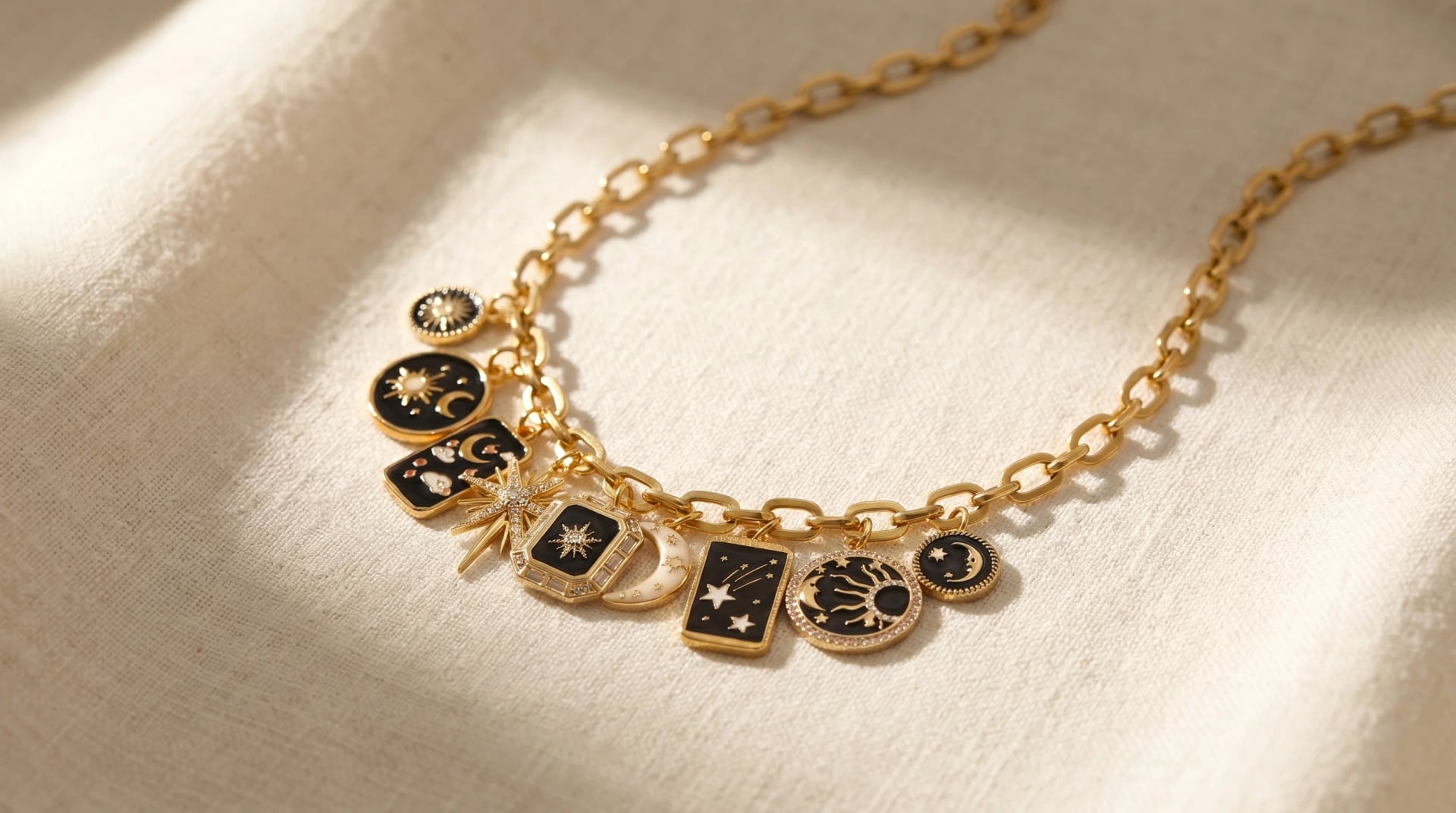
I've been on both sides of this transaction.
Before I launched Enleira, I was a customer first. I'd scroll through jewelry sites late at night, zoom in on product photos until they pixelated into nothing, and still somehow end up with a necklace that looked nothing like what I ordered. Too yellow. Too light. The chain so thin it snapped the first time I put it on.
That experience — repeated enough times — is part of why Enleira exists. And it's why I want to write this honestly, not as a sales pitch, but as someone who spent a decade in design school and on studio floors learning exactly what makes jewelry good or bad before you ever touch it.
So here's what I actually look for when I buy jewelry online. And what I watch out for.
The photo situation is more complicated than it looks
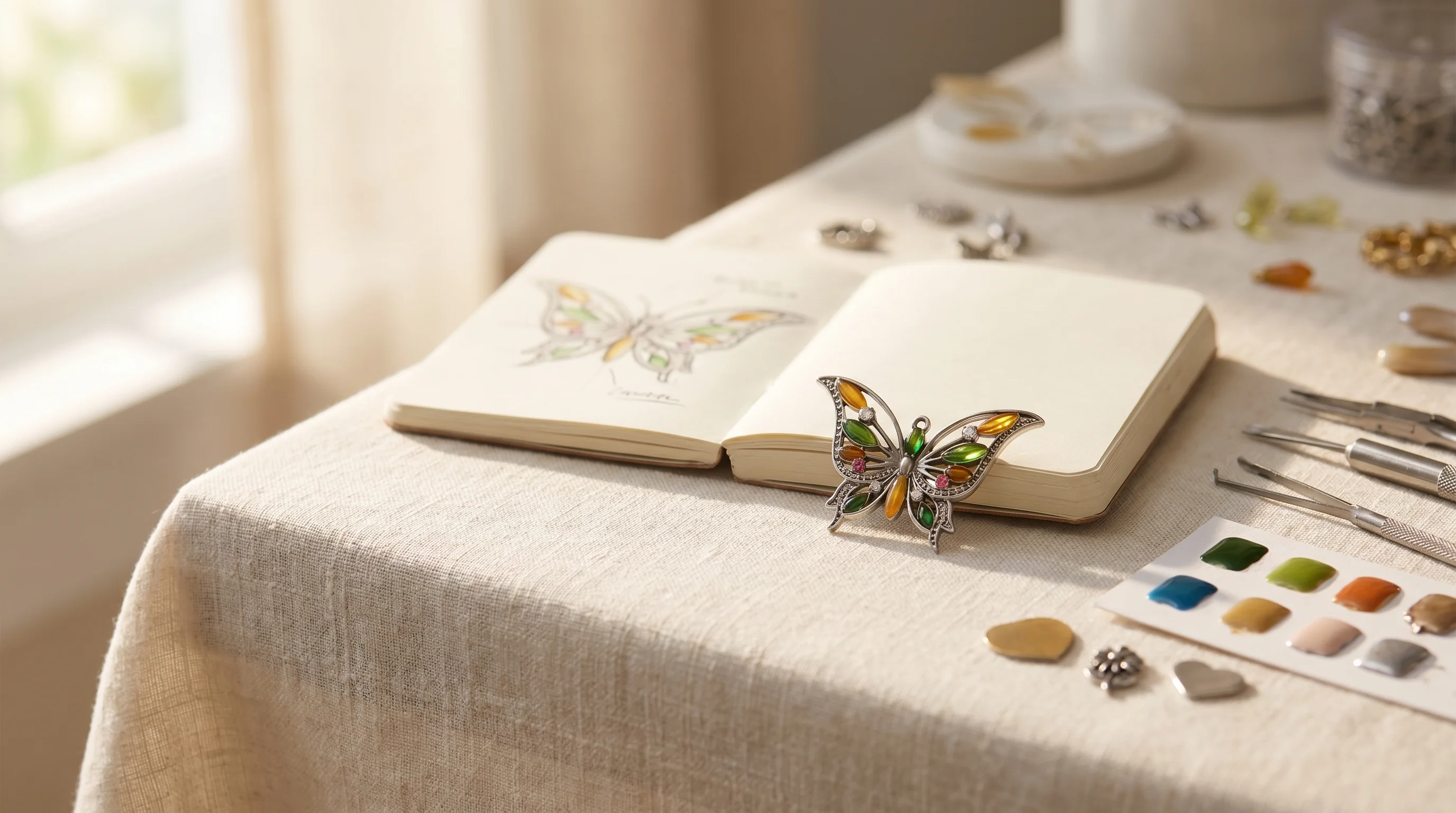
Good product photography is genuinely hard to fake. But it's also the easiest thing for brands to manipulate, and I say that as someone who has spent embarrassing amounts of time getting our own photo setup right.
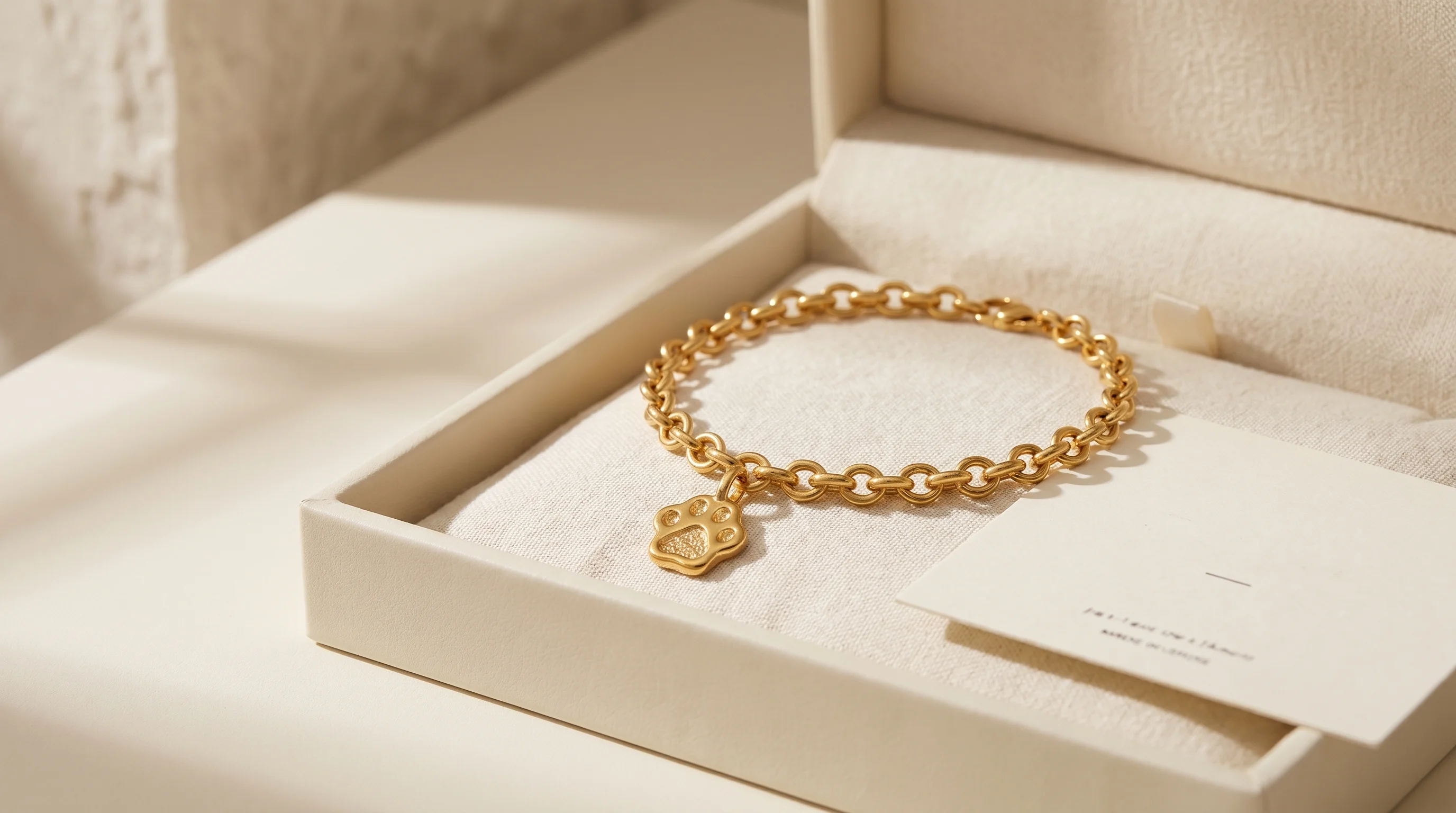
The things I look for: multiple angles, at least one lifestyle shot on a real human body, and — this is the one most brands skip — a scale reference. A pendant floating on a white background with no context tells you almost nothing. Is that 8mm or 25mm? Totally different pieces. Totally different visual impact.
At Enleira, I insist on listing exact charm measurements in millimeters alongside every piece. Not because customers always want to do the math, but because it forces us to be specific. A charm described as "small" by one brand is "statement" by another. Millimeters don't lie.
Also worth noticing: shadows. Harsh overhead lighting can flatten a texture or make plating look thicker than it is. If every product photo looks glossy and perfect in exactly the same way, that's a styling choice — not necessarily an accurate material representation. Natural or diffused side lighting shows you more truth.
Understand what you're actually buying
This one matters more than people realize.
"Gold necklace" covers a breathtaking range of things, from solid 24k gold worth hundreds of dollars per gram to a brass base dipped in a micron of gold plating that'll turn green by Thursday. I'm not exaggerating. The difference in how these pieces wear — and how long they last — is enormous.
Here's my shorthand for decoding listings:
Solid gold means the entire piece is gold through and through. Expensive. Worth it for pieces you'll wear every day for decades.
Gold-filled means a thick mechanical layer of gold bonded to a base metal, usually brass. More durable than plating, longer wear, mid-range price.
Gold-plated means a thin electroplated layer of gold over a base metal. The base metal matters enormously here. Enleira uses 18k gold-plated stainless steel — the stainless steel substrate is corrosion-resistant, which extends the life of the plating compared to brass-based alternatives. I made that choice deliberately. It's a better foundation.
When a brand doesn't specify the base metal, that's not an accident. Ask. Or move on.
When a brand doesn't tell you what's underneath the gold, that's the answer.
And don't get me started on "gold-tone." That's a catch-all that could mean anything. Silver-tone, same story — if it's not sterling silver, it should say silver-tone, and any honest brand will use that language than imply otherwise.
Chain weight is the thing nobody talks about
You know that feeling when you put on a necklace and it just... sits right? That's weight distribution. And it's almost impossible to assess from a photo alone.
What I look for in listings: chain width in millimeters and chain style. A 1.2mm cable chain in stainless steel feels completely different from a 1.2mm figaro in the same metal. The links interact with gravity differently. A box chain at 1.5mm has more structural presence than a snake chain at the same width.
For our necklaces, I typically work in the 16" + 2" extender range (approximately 40cm + 5cm) because that hits the sweet spot between classic collarbone length and the ability to drop it into a mid-chest position depending on the neckline. If a listing only gives you one fixed length with no extender, that's worth noting — fit is personal, and good brands build in flexibility.
How I read reviews (and what I ignore)
Reviews are uneven. Anyone who tells you otherwise is selling something.
What I actually find useful: reviews with photos, reviews that mention how long they've owned the piece, and one-star reviews that describe a specific problem than just venting. "Clasp broke after two weeks" tells me something. "Worst purchase ever" tells me nothing.
What I ignore: five-star reviews with zero detail. "Love it!" could be written by anyone. Also: reviews posted within 48 hours of purchase, which almost certainly don't reflect wear experience.
And this one's a pet peeve — brands that hide or bury their negative reviews. If a site only shows four and five stars, that's a filter, not a reputation. I'd have a transparent 4.3 than a curated 4.9.
At Enleira, we leave reviews up. Even the ones that sting a little. Because they help other customers make better decisions, which is the whole point.
The return and exchange policy tells you everything about a brand's confidence
A short, punishing return window — say, seven days — on jewelry is a red flag for me. Jewelry is tactile. You need to wear it, live in it, see how it sits with your actual clothes in your actual life. Seven days is barely enough time to try everything in your closet.
I also look for whether exchanges are free or whether the customer eats the return shipping. For lower-priced fashion jewelry, absorbing that cost is a choice a brand makes — and it signals how much they believe in what they're selling.
Read the fine print on "final sale" items too. Clearance pieces being final sale is fair. A brand marking everything final sale to avoid dealing with returns is not.
What transparency actually looks like
The brands I trust online share more than the minimum. They tell me who made the piece, what it's made of down to the substrate, how to take care of it, and what to realistically expect over time.
Care information is a good tell. If a brand doesn't mention how to maintain their jewelry, that's either an oversight or an expectation that you'll replace it quickly and buy again. Good jewelry — even thoughtfully priced fashion jewelry — should come with honest guidance on how to make it last.
Our care guide exists because I wanted customers to get the full life out of every piece. Don't sleep in it. Don't shower in it. Store it away from humidity. Take it off before you swim. These aren't complicated rules, but nobody tells you unless they want you to succeed with the piece long-term.
The sizing question
Jewelry sizing has exactly the same problem as clothing sizing: no universal standard, and brands don't always make it easy to figure out what you're getting.
For necklaces, I always check whether the listed length is the total length or the wearable length — sometimes brands measure to the clasp, sometimes not, and a half-inch difference at the collarbone is noticeable. For bracelets, the difference between a 7" and 7.5" is real depending on whether you wear things tight or loose.
Our sizing guide walks through how to measure your wrist, where different necklace lengths fall on different body proportions, and how to pick charm placement that'll feel balanced than accidental. I wrote it because I genuinely couldn't find a good one when I was shopping, and I figured if I needed it, someone else did too.
The custom piece question
Here's where online shopping gets genuinely interesting — and where I think Enleira does something worth talking about.
Charm jewelry has always been personal. That's the whole premise. But for a long time, "custom" online meant filling out a form, waiting two to three weeks, and hoping whoever interpreted your order understood what you meant by "delicate but not too delicate."
The Enleira charm builder was built specifically to close that gap. You can design something that's yours — choosing charms that mean something, arranging them, seeing how the combination reads — without the weeks of back-and-forth or the leap of faith that a stranger correctly interpreted your vision. It's the closest thing to sitting at my workbench and laying charms out yourself.
That interactivity matters online in a way it doesn't in a physical store. In person, you can hold things. Online, you need to be able to think through a combination before you commit.
A few things I specifically watch for that signal quality
Since we're here: some quick tells I've developed over years of looking at jewelry both as a designer and a shopper.
Clasp type matters more than people think. A lobster clasp on a delicate 1mm chain is a mismatch — the hardware overwhelms the chain and the toggle point becomes a stress fracture waiting to happen. Spring ring clasps on heavier chains wear out faster. A well-matched clasp is a small thing that signals the designer thought through the whole piece.
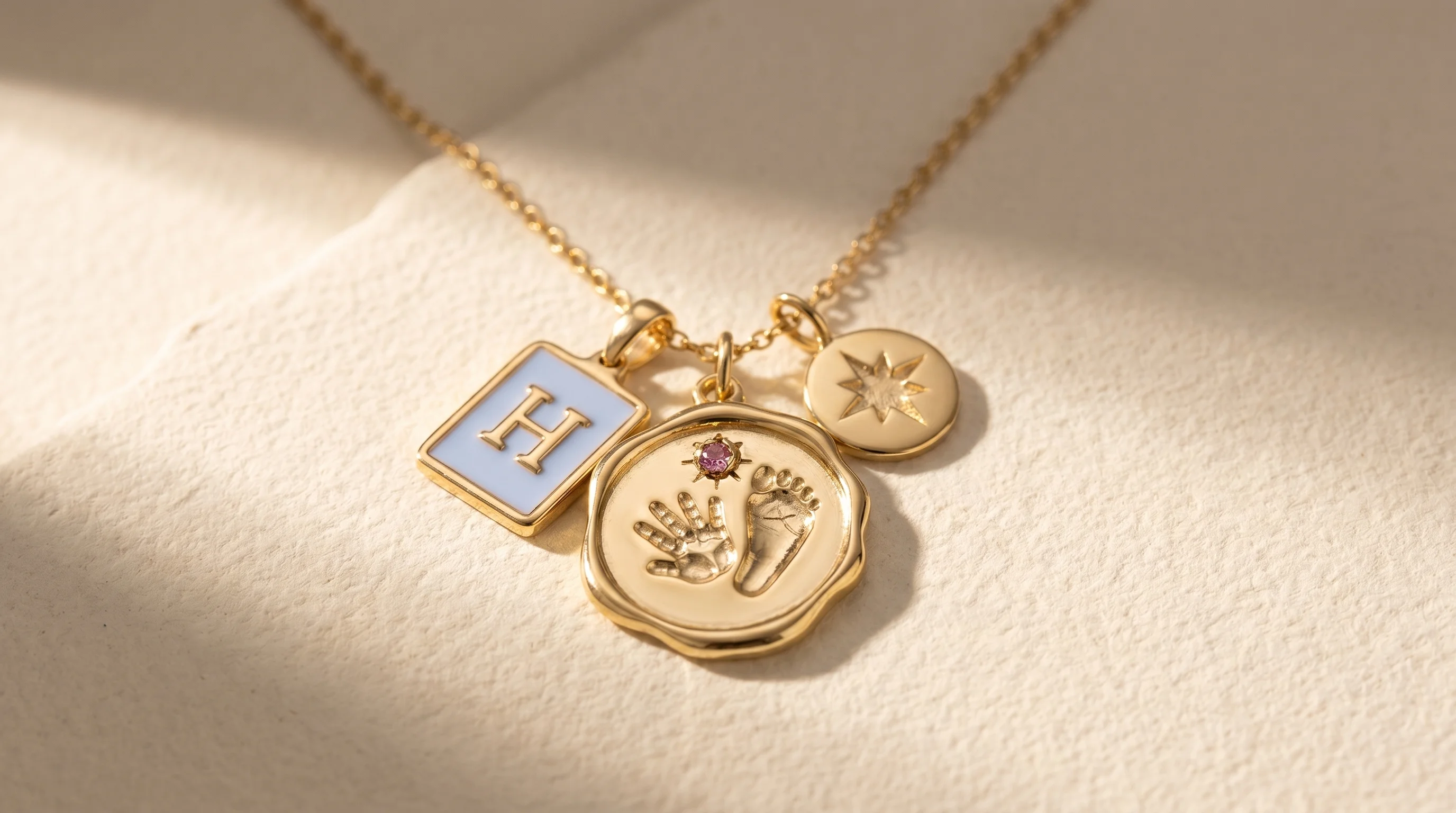
Jump ring size. Tiny jump rings on heavy charms are a problem. The charm weight stresses an undersized ring over time and you lose the charm. I size jump rings relative to the charm weight, always.
Finish consistency. In person, you run your finger along the back of a piece. Online, you're looking at whether the photography shows the back of the piece at all — and whether the finish looks consistent or blotchy. Blotchy plating in product photography is not a lighting issue. It's a quality issue.
Why I built Enleira the way I did
I could've launched a simpler brand. Smaller catalog, less behind-the-scenes detail, less obsessing over base metal specifications and clasp hardware and care instructions.
But the customer I had before I became a designer deserved better than what she was getting. She was spending real money on pieces she wanted to love, and she kept being let down by brands that bet on her not knowing enough to ask the right questions.
She knew. She just needed someone to be honest with her.
That's what I try to do here, with every piece in our signature collection, with every Journal article, with every piece of packaging we put in your hands. Good jewelry online is absolutely findable. You just need to know what to look for — and now you do.

Ariel Garvey
Ariel Garvey is the founder and lead designer of Enleira. She handcrafts every piece from her studio in Sugar Land, Texas, drawing on a deep love of meaningful design and ethical sourcing. When she isn't at the bench, you'll find her going live on TikTok, connecting with her community one charm at a time.