
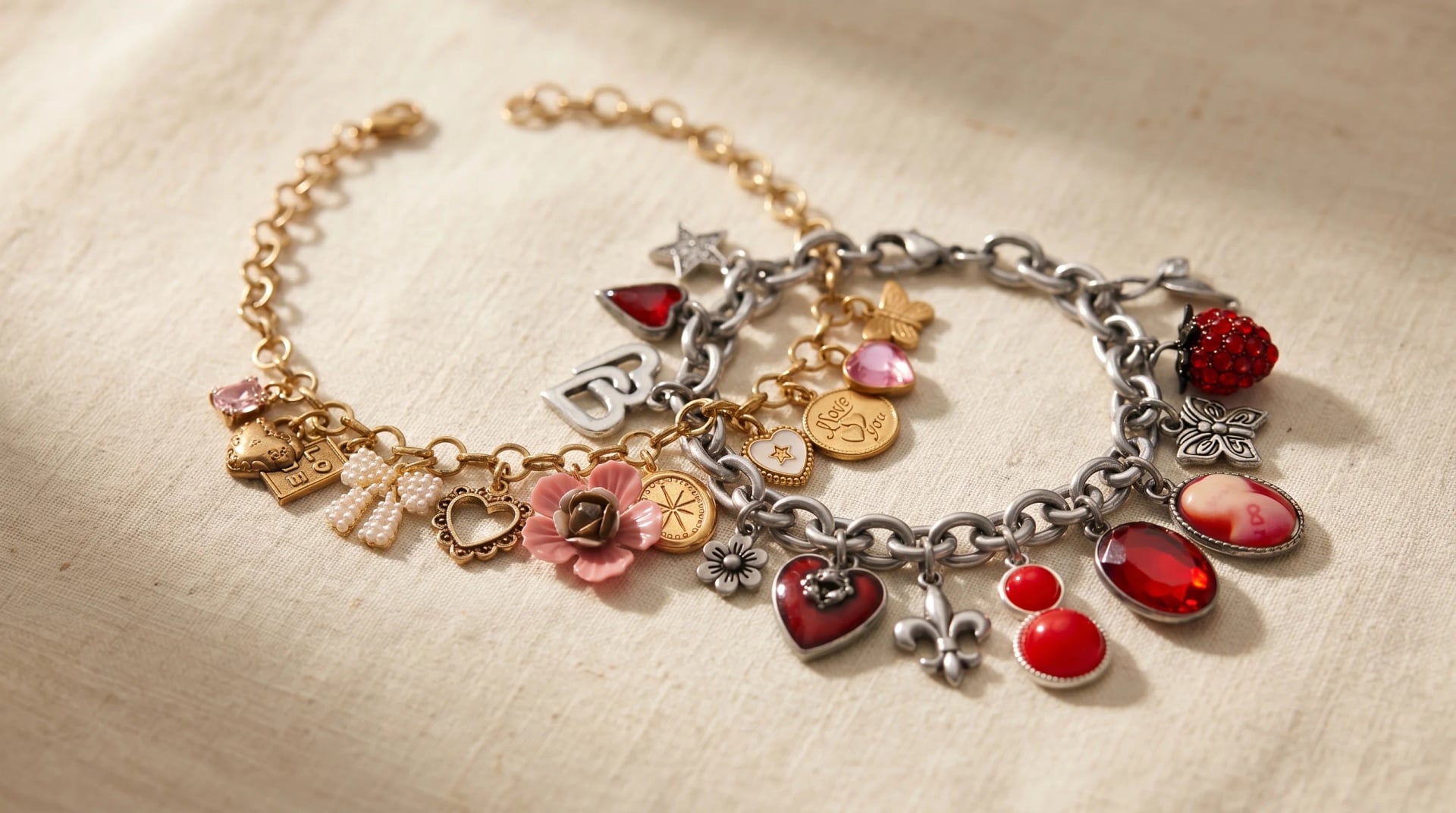
I have a confession to make.
When I was studying at FIT, I became genuinely obsessed with charm bracelet history. Like, stay-up-until-2am-in-the-library obsessed. While my classmates were sketching silhouettes and studying color theory, I was buried in archived fashion journals, reading about ancient Egyptians stringing carved scarabs onto thin gold wire. My professors thought I was delightfully weird. I thought I'd found my calling.
That obsession is the whole reason Enleira exists. So if you've ever wondered why a charm bracelet brand has such a deep reverence for the pieces we make — it starts here. With thousands of years of human history that I find completely, endlessly fascinating.
It Started Way Before You'd Expect
We're talking 75,000 years ago. That's not a typo.
Archaeological discoveries in South Africa found shell beads that historians believe were strung together and worn on the body — likely the wrist. They weren't decorative in the way we think about jewelry today. They were protective. Spiritual. They told the world and whatever existed beyond it exactly who you were.
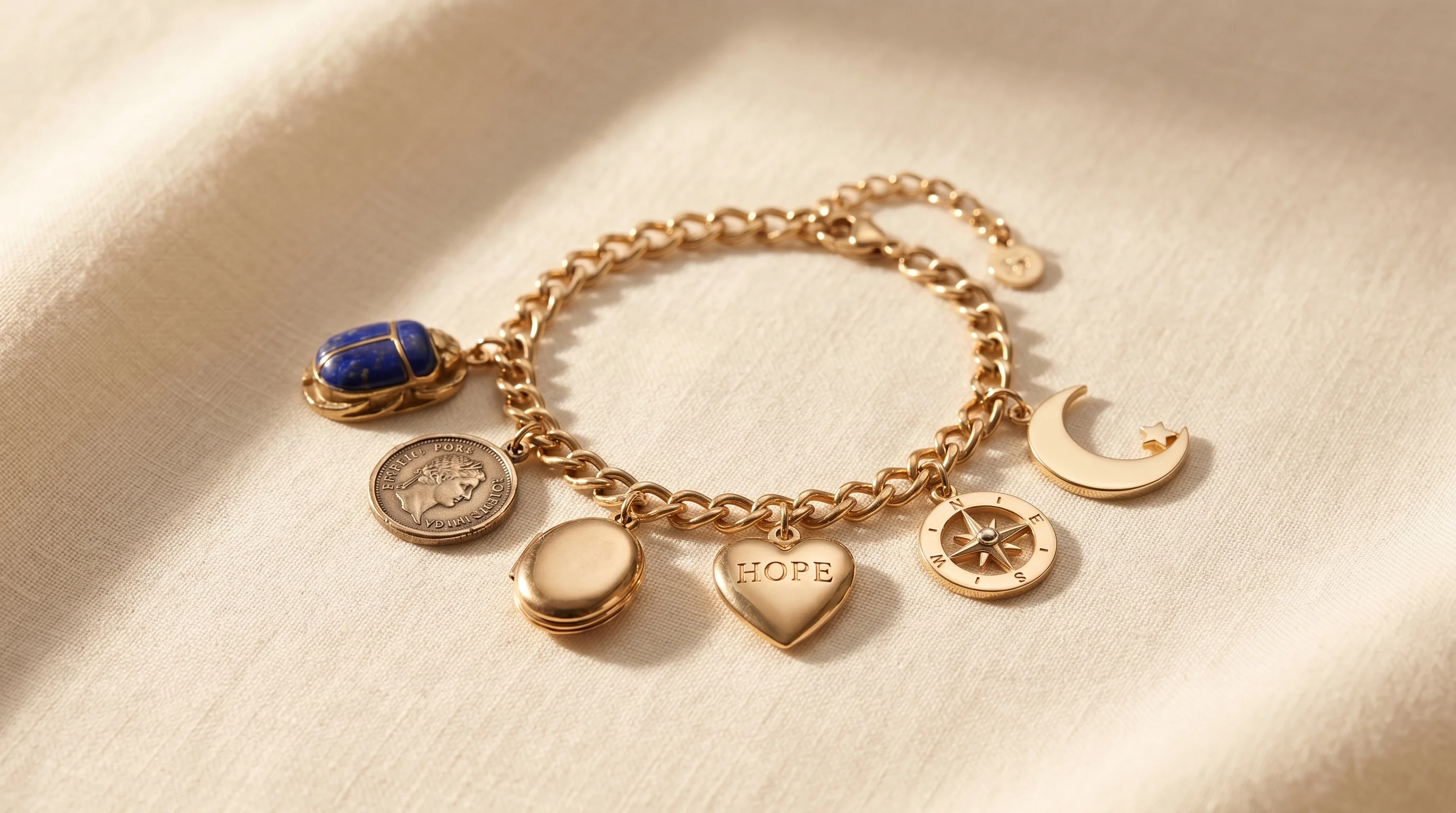
Ancient Egyptians took this further than almost anyone. By around 3000 BCE, wealthy Egyptians were wearing carved amulets made from gold, bone, and precious stone. Lapis lazuli was everywhere — its deep blue color was associated with the heavens, and a carved lapis charm was extraordinarily costly. They wore these on the wrist, around the neck, woven into fabric. The scarab beetle was probably the most popular charm motif of the ancient world — symbolizing rebirth and the protection of the sun god Ra.
And here's the part I find genuinely moving: Egyptians were buried with their charms. The bracelet didn't just protect you in life. It carried your identity into the afterlife.
Rome, Persia, and the Middle Ages
The Romans had their own version of this. Roman soldiers wore small charms carved from clay or bone — fish symbols, small shields, tiny figures of the gods. Early Christians in Rome adopted the fish charm (the ichthys) as a way of identifying themselves to each other during dangerous times. So the charm bracelet was, at one point in history, a matter of survival.
In Persia and across the Middle East, finely worked gold charms appeared on the wrists of royalty by around 600 BCE. Goldsmiths were hammering out remarkably detailed work — crescent moons, stars, hands — all without the precision tools we use today. That always stops me cold. Someone made a 12mm crescent moon charm with hand tools and firelight, and it was precise enough that it survived thousands of years.
The Middle Ages got quieter on the charm front, at least in Europe. The Church wasn't thrilled about amulets and their pagan associations. But people kept wearing them anyway, often hidden under clothing. Protective charms never really went away — they just got a little more discreet.
Queen Victoria Changed Everything
If there's one person who brought the charm bracelet roaring back into mainstream fashion, it's Queen Victoria.
She adored them. After Prince Albert's death in 1861, she wore mourning jewelry obsessively — jet black pieces, lockets containing hair, small portrait miniatures. But before and during her grief, she'd collected and gifted elaborate charm bracelets across the royal family. Her love of the form sparked a craze across Europe and eventually America. If the Queen wore charm bracelets, every woman of means wanted one.
Victorian charm bracelets are extraordinary objects. The craftsmanship is staggering — tiny lockets that actually open, miniature books with real moving pages, small padlocks with working keys. Most were made in 18k or 15k gold (15 karat gold was actually a British standard for a period). Charms ranged in size from about 8mm for delicate floral drops up to 25mm or more for statement lockets.
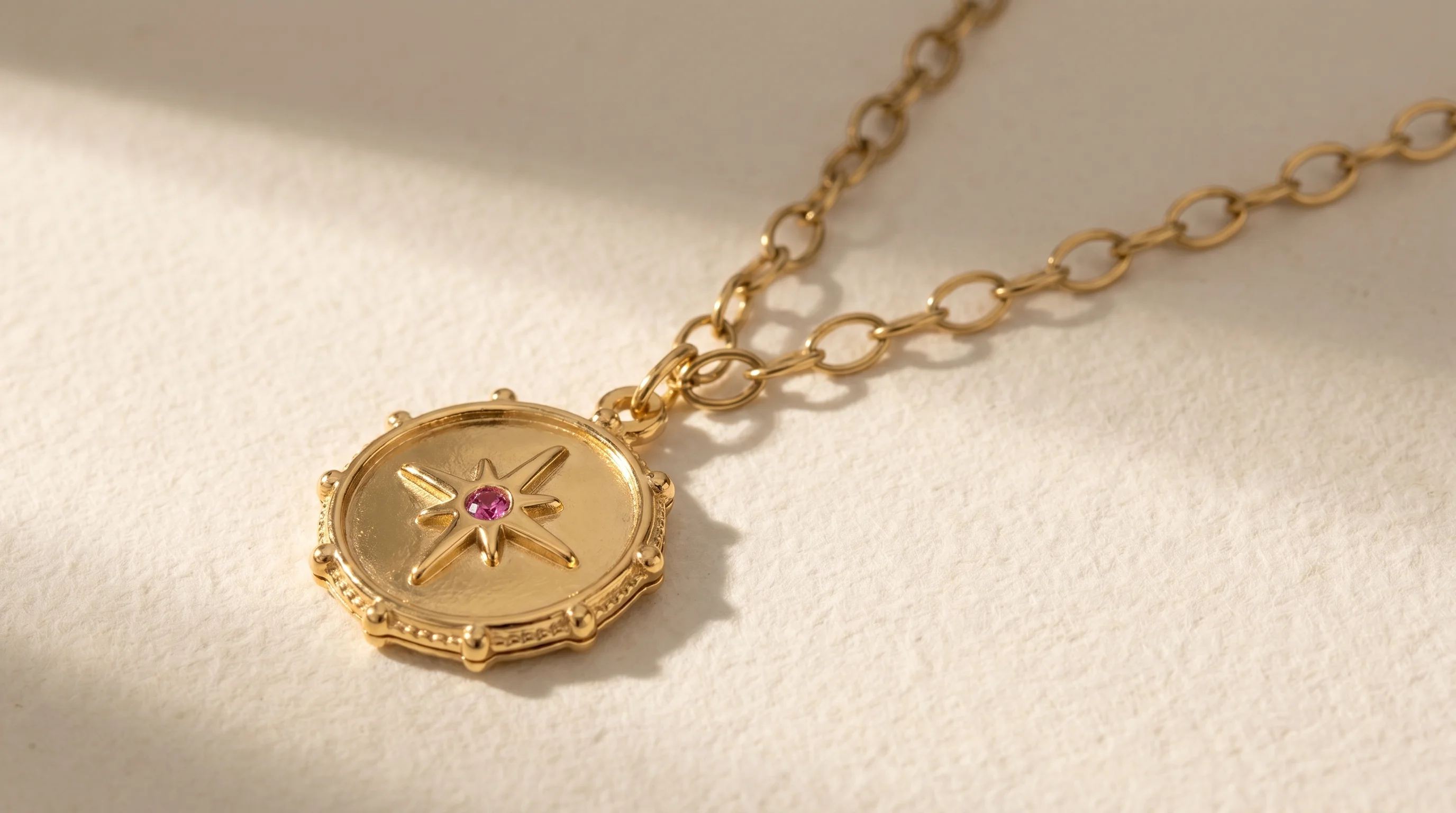
The weight of Victorian bracelets was worth noting too. A fully loaded bracelet could run 30–40 grams — you could feel its presence on your wrist throughout the day. That weight wasn't accidental. It was a sign of wealth, and also of meaning. Every charm had a story.
The 1940s and 1950s: The Golden Era
World War II changed fashion in ways people don't always expect. With metal rationing in place, jewelry had to get creative. But charm bracelets adapted. American soldiers abroad would buy small local charms as souvenirs — tiny Eiffel Towers, Italian horns, British flags — and bring them home to wives and sweethearts. The bracelet became a living map of someone's life and loves.
Then the 1950s happened, and the charm bracelet became a full cultural phenomenon.
Every major jewelry house was producing them. Tiffany launched their version. Cartier had theirs. Department stores had their own lines. And teenagers — for the first time a genuine consumer demographic with actual spending power — wore charm bracelets as a kind of diary. You got a charm for your sweet sixteen. A charm when you made the honor roll. A charm when your first boyfriend worked up the nerve to give you something.
My grandmother had one of these. A yellow gold curb chain, probably 7.5" total, with eleven charms she'd collected over her teenage years and twenties. A tiny ballet shoe (she danced). A small telephone (I never did get the full story on that one). A 14k clam shell that opened to reveal two tiny seed pearls inside. She gave it to my mother, who gave it to me, and I wore it to my first day at FIT. That bracelet is part of why I design what I design.
The 1970s to 1990s: The Quiet Period
Everything goes in cycles.
The charm bracelet fell out of mainstream fashion favor somewhere in the early 1970s, pushed aside by bolder, more architectural jewelry — the sculptural gold pieces and ethnic-inspired beadwork of the decade. Then came the 1980s with its maximalist excess, where charm bracelets felt too delicate, too quiet. The 1990s brought minimalism, and delicate chain bracelets with a single pendant replaced the layered, story-telling stacks of earlier decades.
But charm bracelets never disappeared entirely. They lived on as heirlooms, as children's birthday gifts, as the kind of jewelry that meant something even when it wasn't particularly fashionable.
Meaning has a way of outlasting trends. Always.
The Early 2000s Comeback — and What It Taught Me
The charm bracelet's modern revival is fascinating to study. A Danish brand launched a modular bead-and-charm system right around 2000 that went genuinely global by the mid-2000s. Suddenly charm bracelets were everywhere again, and a whole new generation discovered the pleasure of building something personal on your wrist.
I watched this happen while I was in design school, and I had complicated feelings about it.
On one hand — brilliant. Making jewelry personal and collectible and giftable all at once is a powerful idea. On the other hand, the mass-production of that format flattened some of what made charm bracelets special. The craftsmanship. The specificity. The sense that each individual charm was made with intention, not just pulled from a bin of thousands of identical units.
That tension — between accessible and meaningful, between modern and historically grounded — became my design problem to solve. I spent years working on it before Enleira launched.
What Makes a Charm Meaningful, Historically Speaking
Here's what I took from all those late nights in the FIT library: across every era, in every culture, charm bracelets worked because they were personal. Not in a vague way. In a deeply specific way.
The ancient Egyptian didn't wear just any scarab. They wore their scarab — often inscribed with their name, their family, their prayers. The Victorian woman's locket charm contained a portrait of her specific child. The 1950s teenager's ballet slipper charm meant something only she fully understood.
The object carried the story. And the story made the object matter.
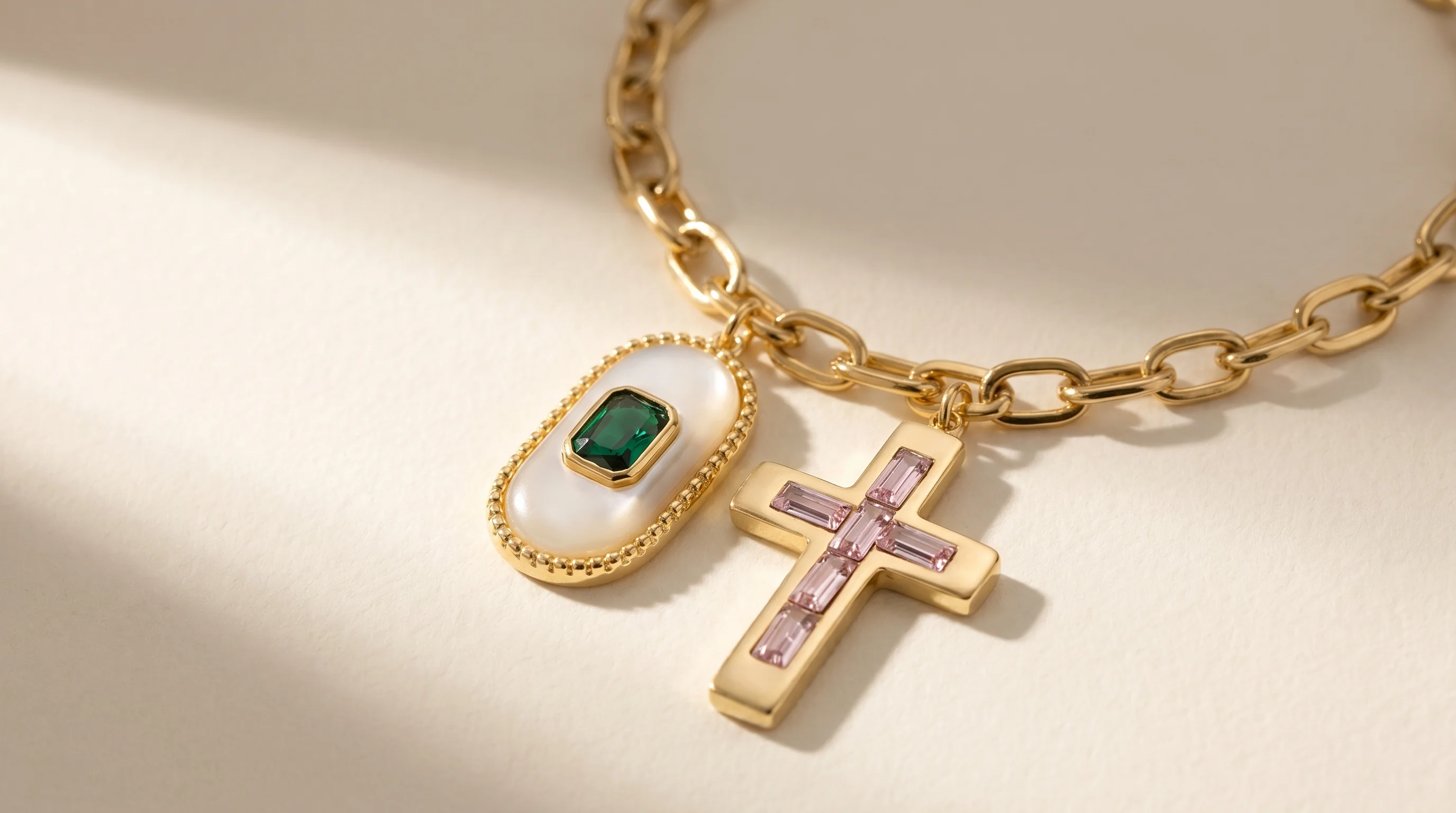
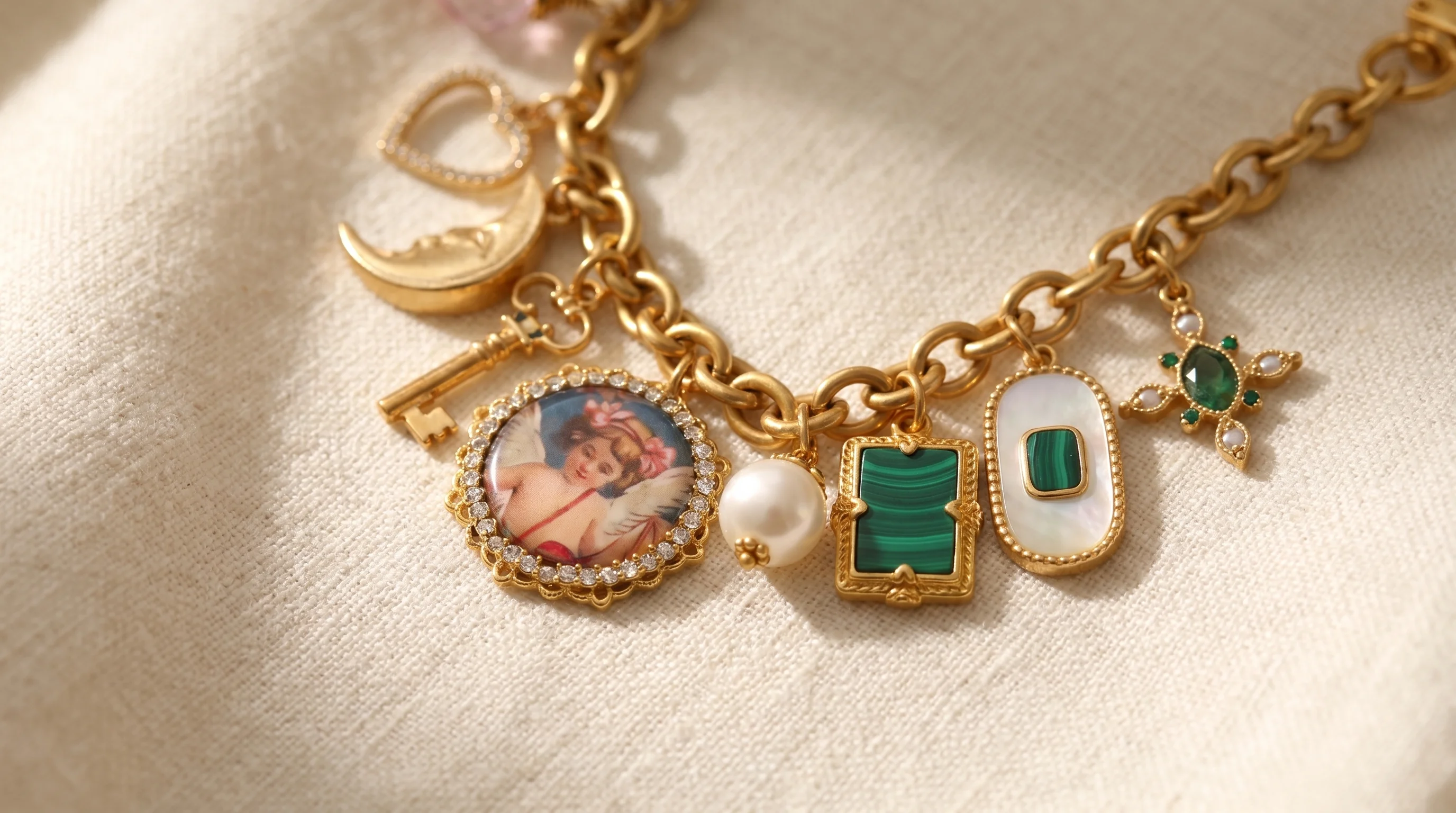
When I design a charm, I'm thinking about that lineage. Enleira works in 18k gold-plated stainless steel — with a smaller line in solid brass that ages with character — and I spend a lot of time on proportions — most of our charms sit in the 14–20mm sweet spot, with a few statement pieces running larger — that's the range where a piece is visible and meaningful without overwhelming a delicate chain. Weight matters too. Our charms are large enough to feel real on the wrist, without pulling the chain out of position.
A 15mm crescent moon charm in 18k gold plate catches light the same way a finely finished piece of fine jewelry does. The plating process, when done well, gives warmth and depth that bright silver-tone finishes simply don't have. I chose 18k specifically because of its color temperature — richer and warmer than 14k, a little more yellow-gold in a way that reads as intentional than budget-driven.
The Style of Charm Bracelets Across History
One thing that surprised me in my research: the silhouette of the charm bracelet barely changed for thousands of years.
A flexible chain or cord. Individual hanging elements. Worn on the wrist. That's it. That's the whole architecture.
What changed was scale, material, and meaning. Egyptian charm bracelets were often wider and more rigid — closer to a cuff with hanging amulets. Roman charm bracelets were lighter, more casual. Victorian charm bracelets prioritized weight and preciousness. Mid-century American charm bracelets prioritized story and accumulation.
But the key grammar of the form — charms hanging freely, catching light as you move — that hasn't changed. And I think there's something beautiful about that. You put on a charm bracelet today and your wrist is doing something wrists have been doing for seventy-five thousand years.
Why I Design Charms the Way I Do
My NYFW experience in 2014 reinforced something for me. Clothes have seasons. Fashion has a relentless forward momentum, always discarding last year in favor of next year. Jewelry doesn't have to work that way.
A charm bracelet can start with one charm on your twentieth birthday and be a completely different, layered, storied object on your fortieth. It's one of the few categories of personal adornment that actually gets better with time. More meaningful. More specifically yours.
So when people ask me why Enleira focuses so deeply on charm jewelry — why it's the center of almost everything we make — this is the answer. Not because charms are of-the-moment (though they absolutely are right now). Because they're ancient. Because they've meant something to humans longer than we've had written language to say so.
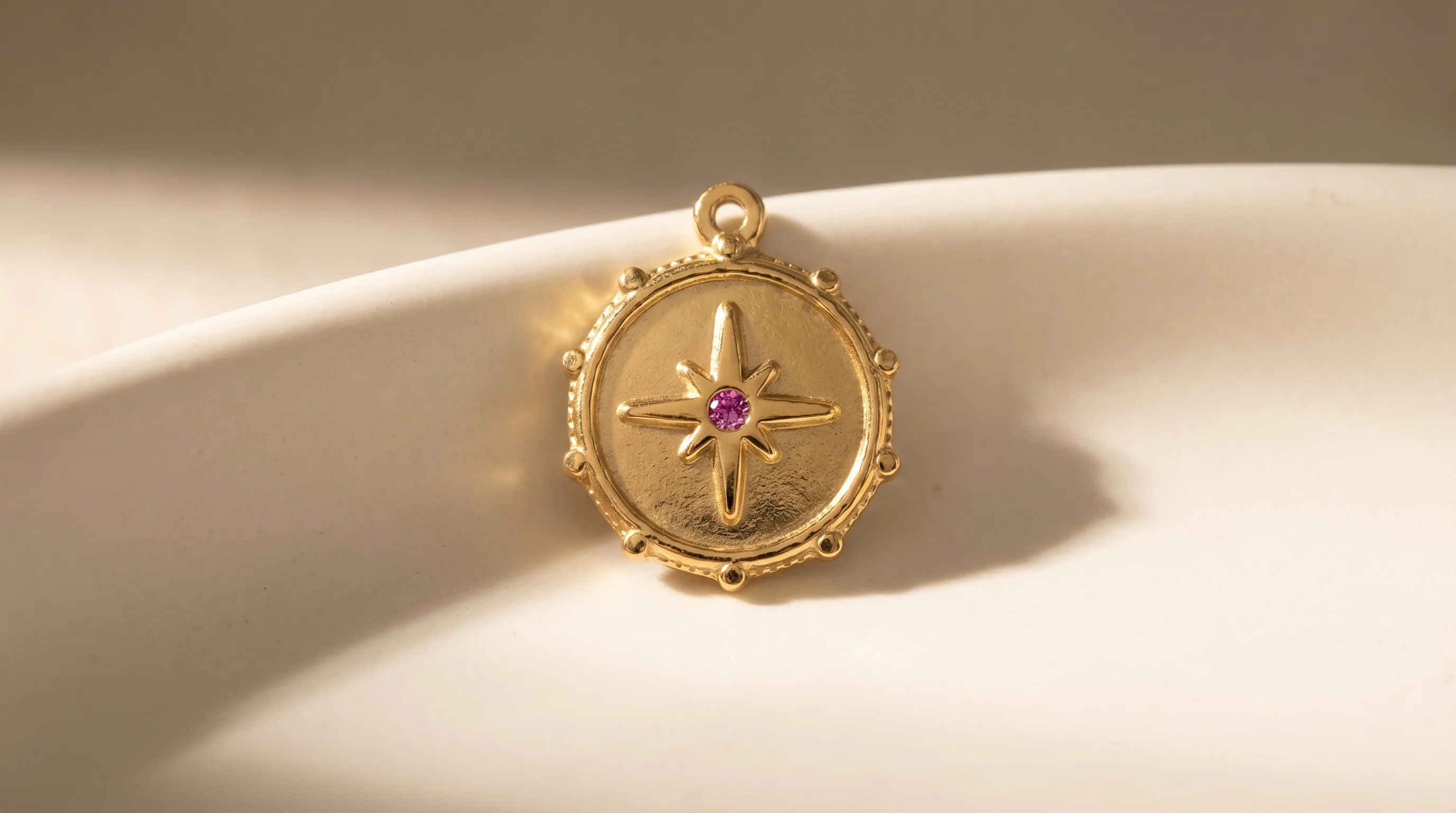
There's a woman somewhere right now building a charm bracelet that her granddaughter will wear to her first day of design school. Or law school. Or a gallery opening. Or somewhere we can't imagine yet.
That bracelet is going to tell that granddaughter something true about who her grandmother was and what she loved.
That's what I'm designing toward. Every single time.
Ariel Garvey is the founder and designer of Enleira. She writes about jewelry, design, and the stories objects carry in The Journal.

Ariel Garvey
Ariel Garvey is the founder and lead designer of Enleira. She handcrafts every piece from her studio in Sugar Land, Texas, drawing on a deep love of meaningful design and ethical sourcing. When she isn't at the bench, you'll find her going live on TikTok, connecting with her community one charm at a time.